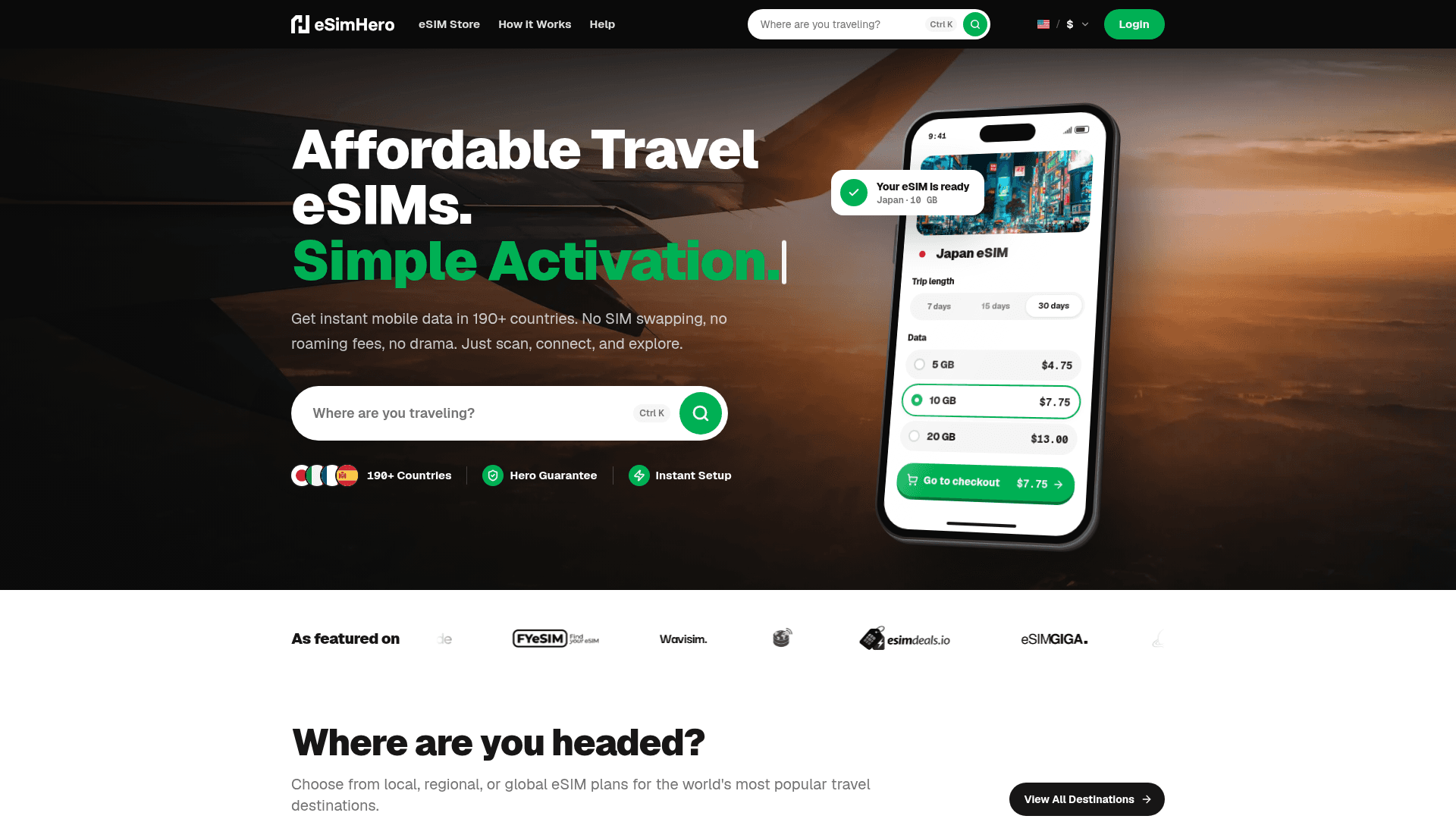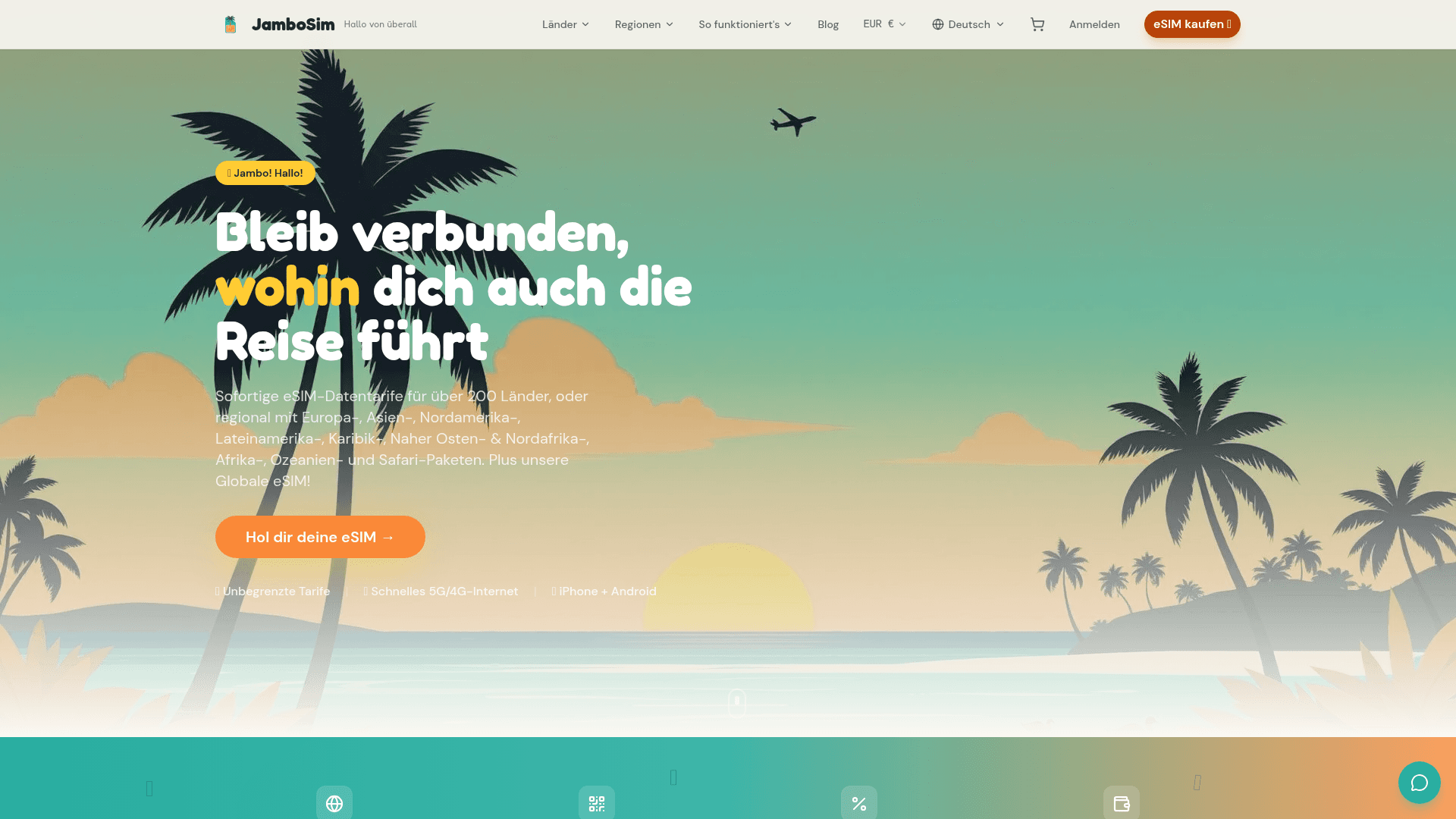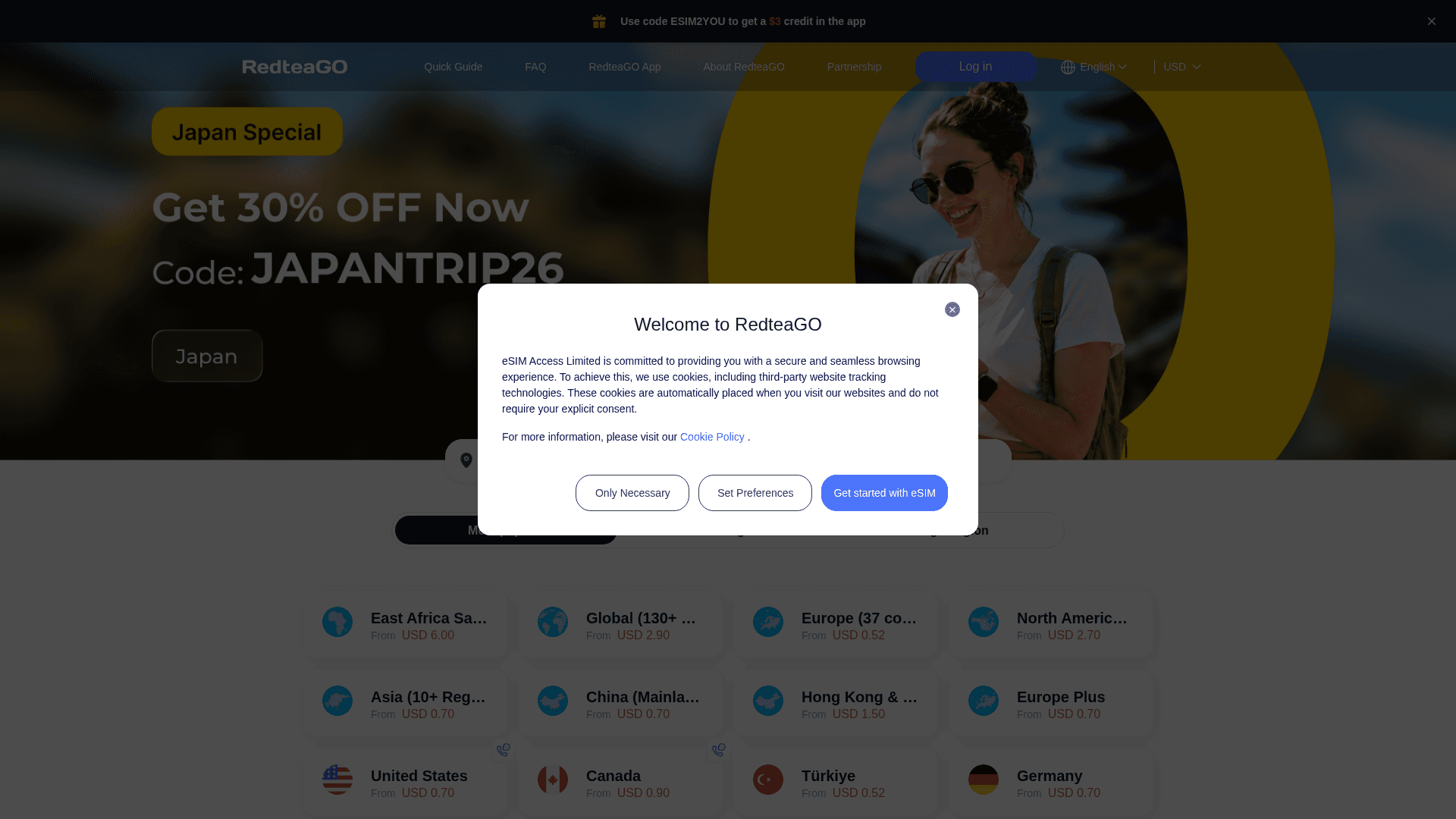
Compare 4 top-rated eSIM providers as alternatives to Roamless. Find better pricing, features, and coverage.

Roamless offers solid global coverage across 194 countries, but with a 3.5-star rating and thousands of plans to sift through, many travelers find themselves hunting for simpler or more affordable options. We've compared four strong alternatives in 2025—Airalo, Saily, UBIGI, and simOptions—that consistently deliver better value or higher customer satisfaction. If budget matters most, simOptions stands out as both the most affordable and highest-rated choice among the bunch.
Roamless offers an impressive catalog of 4,367 plans spanning 194 countries, making it one of the most comprehensive eSIM providers available. But with a TrustPilot rating of 3.5 and an average cost of $2.45 per GB, travelers shopping around will find both cheaper and higher-rated alternatives worth considering. Roamless makes the most sense when you need very specific regional coverage or want maximum choice in plan configurations—that vast selection means you're more likely to find a plan tailored to an unusual itinerary or multi-country trip.
Price-conscious travelers should know that simOptions consistently undercuts Roamless on cost. While Roamless averages $2.45 per GB, simOptions holds the position as the cheapest alternative in this comparison. The savings add up quickly for data-heavy users streaming maps, uploading photos, or video calling home. The trade-off for those lower prices isn't immediately obvious from the numbers alone, though it's worth checking whether simOptions offers the same breadth of niche regional plans that Roamless provides through its 4,367-plan catalog.
Coverage breadth deserves careful attention depending on where you travel. Roamless's 194-country footprint is genuinely useful for travelers hopping between less-visited destinations or planning complex routes through multiple regions. Alternatives like Airalo, Saily, and UBIGI each have their own coverage maps, and simOptions competes directly in this space while maintaining lower prices—suggesting their network partnerships are either more efficient or their margin strategy differs from Roamless.
Customer satisfaction tells an interesting story: simOptions doesn't just win on price but also claims the highest rating among all alternatives reviewed here. This combination of affordability and customer approval suggests they've nailed the fundamentals that frustrate travelers most—reliable connections, a functional app that doesn't crash at the airport, and responsive support when things go wrong. Roamless's 3.5 TrustPilot score isn't disastrous, but it's low enough to warrant reading recent reviews before committing to a longer-term or expensive plan.
For quick decision-making: choose Roamless when you're traveling to unusual country combinations and need that deep plan selection, or when a specific regional bundle fits your exact itinerary. Switch to simOptions when budget matters most and you're visiting commonly-served destinations—you'll save money per GB and likely have a smoother experience based on customer feedback. Airalo, Saily, and UBIGI each have their niches too, but they occupy the middle ground between Roamless's vast selection and simOptions's combination of value and reliability.

Airalo stands out as a compelling choice for travelers who prioritize affordability without sacrificing reliability. At $0.53 per day on average, it matches Roamless closely on price per gigabyte while maintaining a 4.0 TrustPilot rating—notably higher than Roamless's 3.5. The service covers 178 countries, which is 16 fewer than Roamless, but still spans every major travel destination across Europe, Asia, the Americas, and Africa. With over 1,260 plans available, Airalo offers plenty of options for both short city breaks and extended trips, though Roamless does edge ahead with its larger catalog of 4,367 plans.
Where Airalo truly shines is for budget-conscious travelers making frequent trips to well-traveled regions. The combination of competitive rates and strong user ratings makes it particularly attractive for digital nomads or regular business travelers who need reliable data in popular destinations like Thailand, Portugal, or Mexico. Roamless might still appeal to those who need coverage in more obscure locations or want access to highly specialized regional plans, but for the vast majority of international travel, Airalo's network reaches everywhere it needs to. The higher customer satisfaction score also suggests fewer headaches with activation and connectivity—a critical factor when landing in a new country.
For most travelers, Airalo makes sense when:

Saily stands out as a compelling alternative with coverage spanning 195 countries—one more than Roamless—and a notably higher TrustPilot rating of 4.0 compared to Roamless's 3.5. Daily costs average just $0.53, making it one of the more budget-friendly options for travelers who prioritize affordability without sacrificing reliability. The platform's pricing structure makes it particularly attractive for multi-week trips where even small per-day savings compound quickly. While Roamless offers significantly more plans (4,367 versus Saily's 816), that larger catalog doesn't necessarily translate to better value for most travelers—it can actually make plan selection more confusing.
Saily excels for budget-conscious travelers heading to popular destinations across Europe, Asia, and the Americas, where its coverage is robust and plans are straightforward to navigate. The higher user rating suggests fewer connection issues and better customer service experiences, which matters when you're troubleshooting connectivity from a foreign country. Roamless retains an edge if you need highly specialized regional plans or prefer having dozens of options for a single destination, but most travelers find Saily's curated selection easier to work with. For someone planning a two-week European vacation or a month-long digital nomad stint in Southeast Asia, Saily's combination of reliable coverage and lower daily costs delivers better overall value than sifting through Roamless's overwhelming plan library.


UBIGI stands out as a practical alternative to Roamless, particularly for travelers who prioritize geographic reach and value strong customer feedback. While Roamless offers an impressive 4,367 plans across 194 countries, UBIGI covers 200 countries—six more destinations—with a 4.1 TrustPilot rating that edges out Roamless's 3.5. The pricing between the two remains comparable, with UBIGI averaging $0.73 per day and $2.45 per GB, making it accessible for both short trips and extended stays. The real advantage lies in UBIGI's extensive network paired with its higher user satisfaction scores, which suggest fewer connectivity headaches in practice.
Travelers heading to remote or less-common destinations benefit most from UBIGI's broader footprint. Those six additional countries might include emerging markets or island nations where coverage gaps frequently frustrate users of other providers. UBIGI's 923 plans provide enough flexibility for different data needs without the overwhelming choice paralysis that nearly 4,400 options can create. That said, Roamless's far larger plan library does offer more granular options for travelers who want ultra-specific data packages or need coverage tailored to niche itineraries. Budget-conscious digital nomads staying in one region for weeks will appreciate UBIGI's competitive daily rate and straightforward plan structure.
Choose UBIGI when reliability and geographic breadth matter more than having endless plan permutations. The higher rating reflects real-world performance, and the extra country coverage eliminates the risk of arriving somewhere only to discover your provider doesn't operate there. Roamless remains a solid fallback for travelers who prefer maximum plan variety or have found a specific package that perfectly matches their trip duration and data usage.


simOptions stands out as a compelling alternative to Roamless for travelers who prioritize affordability without sacrificing global reach. At $0.50 per day on average, simOptions undercuts Roamless substantially, making it a practical choice for extended trips where daily costs add up quickly. The provider also covers 199 countries—five more than Roamless—and maintains a 4.3 TrustPilot rating, demonstrating stronger user satisfaction than Roamless's 3.5. While simOptions offers fewer total plans (1,111 compared to Roamless's 4,367), the selection still spans a wide variety of destinations and data allowances, ensuring most travelers will find suitable options.
Budget-conscious travelers heading to multiple countries will find simOptions particularly advantageous. A two-week trip across Southeast Asia or Europe, for example, could save $20–30 compared to Roamless while delivering the same connectivity across borders. The higher user rating suggests fewer complaints about connection quality or customer service, which matters when troubleshooting from abroad. Roamless does retain an edge in sheer plan diversity, making it potentially better for niche destinations or travelers who want hyper-specific data packages tailored to very short stays. However, for most standard itineraries—whether backpacking for a month or working remotely across several countries—simOptions delivers better value and broader geographic flexibility at a lower daily rate.
After comparing Roamless with Airalo, Saily, UBIGI, and simOptions in 2025, one provider stands out for most travelers: simOptions delivers the best combination of competitive pricing and strong user ratings. If you're looking to save money without sacrificing reliability, simOptions is the clear winner—it consistently undercuts competitors while maintaining high customer satisfaction scores.
Different priorities point to different choices:
Roamless still works if you already have credit loaded or need a specific niche destination, but switching to one of these four alternatives—especially simOptions—will likely save you money and deliver a better experience. For most people, there's little reason to stick with Roamless when stronger, more affordable options are readily available.